

At the Doorknob: What Patients Say at the Door
We save our most important secrets until safety feels certain.


People in therapy say the most important things in the last thirty seconds of a session.
Throughout my fifty years of practicing psychiatry, I have seen this axiom proven over and over.
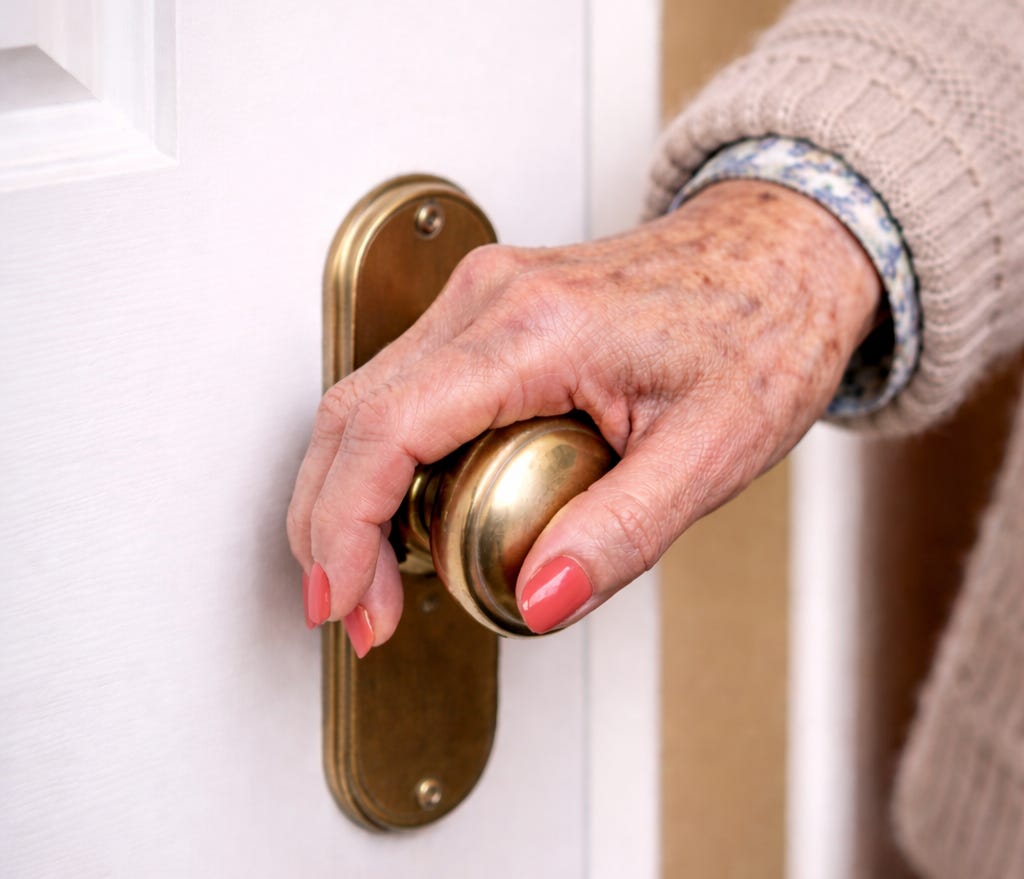
Bobo the Clown revealed her deepest secrets with her hand on the doorknob, twenty-five years after I first saw her.
It took years for me to share my secret, too.
Bobo’s Last Thirty Seconds
One of those people was a woman in her early seventies whom I had seen for about twenty-five years. She had long-standing difficulties with depression that had exacerbated in midlife.
When we first met, she was very fragile. She had all of the symptoms of a Major Depression, most likely aggravated by menopause. She considered ending an emotionally empty relationship with her husband, but feared being alone.
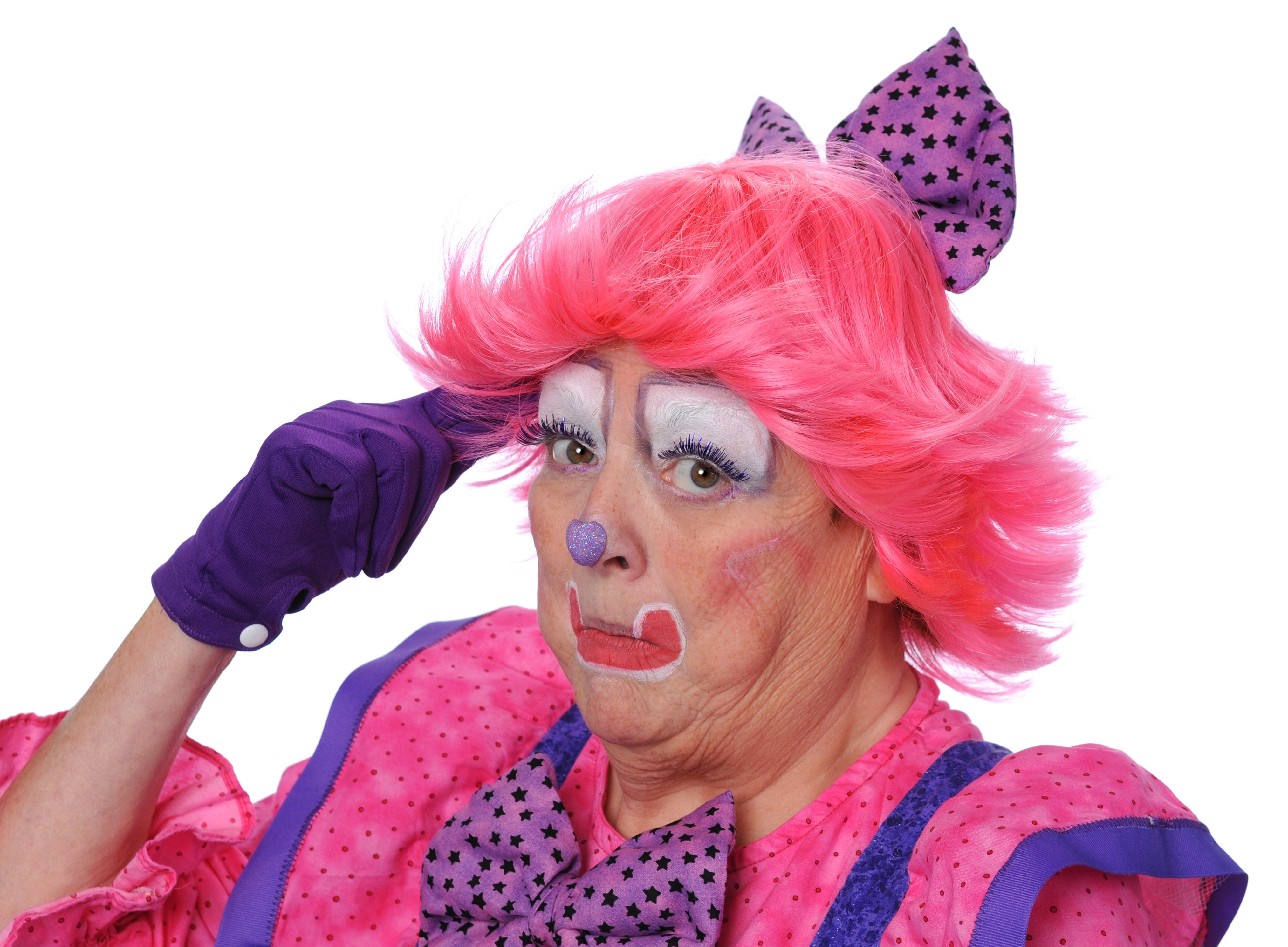
DepositPhotos
Her primary joy came from dressing as Bobo the Clown for children’s parties.
Over time, with antidepressants and years of therapy, she improved, but she frequently expressed sadness about a life not lived.
In later years, we met only every few months—brief check-ins, medication renewals, and a chance to catch up on the shape of her life.
She began our final session by saying, “Dr. Olson, I read your book!” In Finally Out: Letting Go of Living Straight, I had written about having come out as gay in my early forties.
She added, indignantly, “You told me a lot more than you need to.” Then she demanded, “Why did you do that?” I couldn’t tell whether she was disgusted by learning my truth or if she felt betrayed that I’d never revealed it.
I felt defensive and stammered as I responded, “I wanted to be honest about my life in hopes it would help others who struggled with the same issues.”
And then I added, “I couldn’t have written that book earlier in my career. I had to wait until it felt safe.”
A career doorknob revelation.
After we reviewed our work together, she stood slowly and moved toward the door. With her hand on the doorknob, she looked back at me and said, “I’ve always thought I was a lesbian.” Then, quickly, she was out the door.
I stood at the door, stunned. I would never see her again.
I’ll never know whether knowing my secret made it harder or easier for her.
My Last Sessions
That final visit often brings up how patients have dealt with other losses in their lives. I hadn’t expected that it would stir up feelings about my own losses.
Retiring was painful for me. Even with careful boundaries, I had become attached to my patients.
When I retired, I was saying goodbye to people who had shared the darkest moments in their lives.
It was my last thirty seconds with each of my patients, too.
What I told them was this:
You will take me with you.
In the future, you can have conversations with me in your head. You can ask yourself, ‘What would Dr. Olson say about this?’
You will probably know the answer.
I took them with me, too.
My Last “Last Session.”
I first saw “Betty” when she was sixty and nearly house-bound from symptoms of Obsessive-Compulsive Disorder.
She was ninety-five at the time of our last visit.
I had treated Betty with an MAO-Inhibitor—a rarely used, old antidepressant. Her transformation was dramatic. She moved from a life of isolation to become the unofficial social coordinator for her senior living facility.
Other physicians hate MAO-I medications because they complicate their treatments. I had many fights with her other doctors about why, after so many treatment failures with other medications, Betty needed to remain on the one I’d prescribed.
Betty was my final patient on my last day in the office. Her daughter brought her in. She pushed her walker as she entered my office. After she sat down, her daughter put the seat down on the walker and covered it with a tea towel.
They had called the office ahead and asked my office manager, Cathy, to put on some coffee. They brought a cake, balloons, and a beautiful card that I still have. A handwritten note in the card said, “Thanks for giving us back our mother.”
As she left my office, Betty cried.
Her daughter cried.
I cried.
As I ushered her to the door, Cathy was at her desk, crying.
A Final Revelation
Looking back, I can see now that writing Finally Out was my final revelation, a way of leaving something behind after the office door closed for the last time.
It was finally safe.
When I left my wife in 1986, I took a job as Medical Director of Psychiatry at a large medical center in Des Moines, Iowa. One of my responsibilities was to deal with some unethical practices of two psychiatrists.
One day, as I arrived on the psychiatric unit, I was met by the social worker. She said, “Dr. Olson, Dr. [name withheld] is on his way to the hospital administration to tell them you’re gay.”
Throughout my training, homosexuality was labeled a “pathological deviancy.” Even though it was removed from the Diagnostic and Statistical Manual of Mental Disorders in 1973, deviancy was not erased from people’s minds.
In 1986, it was still a risky time to be a gay physician. Very few physicians were openly gay, and certainly not ones in leadership positions. My being gay was a secret I had closely guarded.
I had good reasons to keep this secret. I had huge alimony and child support payments, and I needed that job.
I called my administrator and said, “Sharon, I need to talk with you right away.”
As I sat down with her, I nervously said, “Sharon, I need to tell you something. I’m gay.”
She responded, “Loren, we knew that when we hired you.”
Years and years of bottled-up fear drained from my body.
It’s Not the Words
We don’t hide secrets because we’re being dishonest. We hide them because truth has consequences. They become speakable only when it feels safe. Or sometimes, when time is running out.
We were told during my training that healing in therapy rests on three things: genuine warmth, accurate empathy, and unconditional positive regard. I don’t remember being told how long that can take.
I spent years trying to earn my patients’ trust. I told them I would make mistakes, but I would never intentionally harm them. It wasn’t the words that mattered.
What mattered was proof, over time, that I was trustworthy.
For Bobo the Clown, trust didn’t come easily. I hope that, having read Finally Out, she knew that I understood and accepted her. With Betty, trust had come more easily because her renaissance came so quickly.
When Sharon said, “We knew that when we hired you,” she was warm, empathetic, and accepted me as I am.
Trust isn’t given. It’s earned. Sometimes it takes years.
For Bobo the Clown, that took twenty-five years, with her hand on the doorknob for the final time.
—Loren
This is the first of a three-part series on revealing our secrets.
If you enjoyed this post, leave a heart or a comment. It means a lot to me.
 | A guest post by
|
I wish I had had a therapist who talked to me like you did with your patients, instead of a psychiatrist who never did and only doped me up to high heaven. That guy really killed any hope I had for getting help where I am.
It couldn't have been easy to retire, especially with all the people you actually connected on a deep level missing you. That only goes to show how great you were.
Proud of you, Lo. ❤️
I love your authenticity! It makes you such an incredible human and certainly the top 5 psychiatrists
( probably top 2)that I've ever worked with in my 43 years of psych nursing. I've witnessed your work with patients on several occasions and remember how you made them feel: heard, accepted, understood and supported.
Its a gift. You have it. In full disclosure, I wished you were my Dad. This authenticity, honest thing is catchy.