

Reconstructing A Life
An encore for a house and a self


We all must decide which parts of ourselves to carry forward and which to leave behind.
Doug and I decided to farm even though we had no experience. My step-father, a cattle farmer, said, “You have found the secret to successful farming — a medical practice on the side.”
We bought 240 acres of raw land in Iowa, not far from where The Bridges of Madison County was filmed. We didn’t even know how big 240 acres was. Our neighbor pointed toward a field in the distance and said, “Over there is your fourth pond.” We had 80 acres that we didn’t know were ours.
Not typical Iowa farmers
Then we bought twenty-three head of Belted Galloway cattle. Our neighbors thought our cattle belonged in a zoo, not on an Iowa farm. In Iowa, tractors are green; cattle are all black. To our neighbors, our shaggy black-and-white cows reminded them of Oreo cookies.
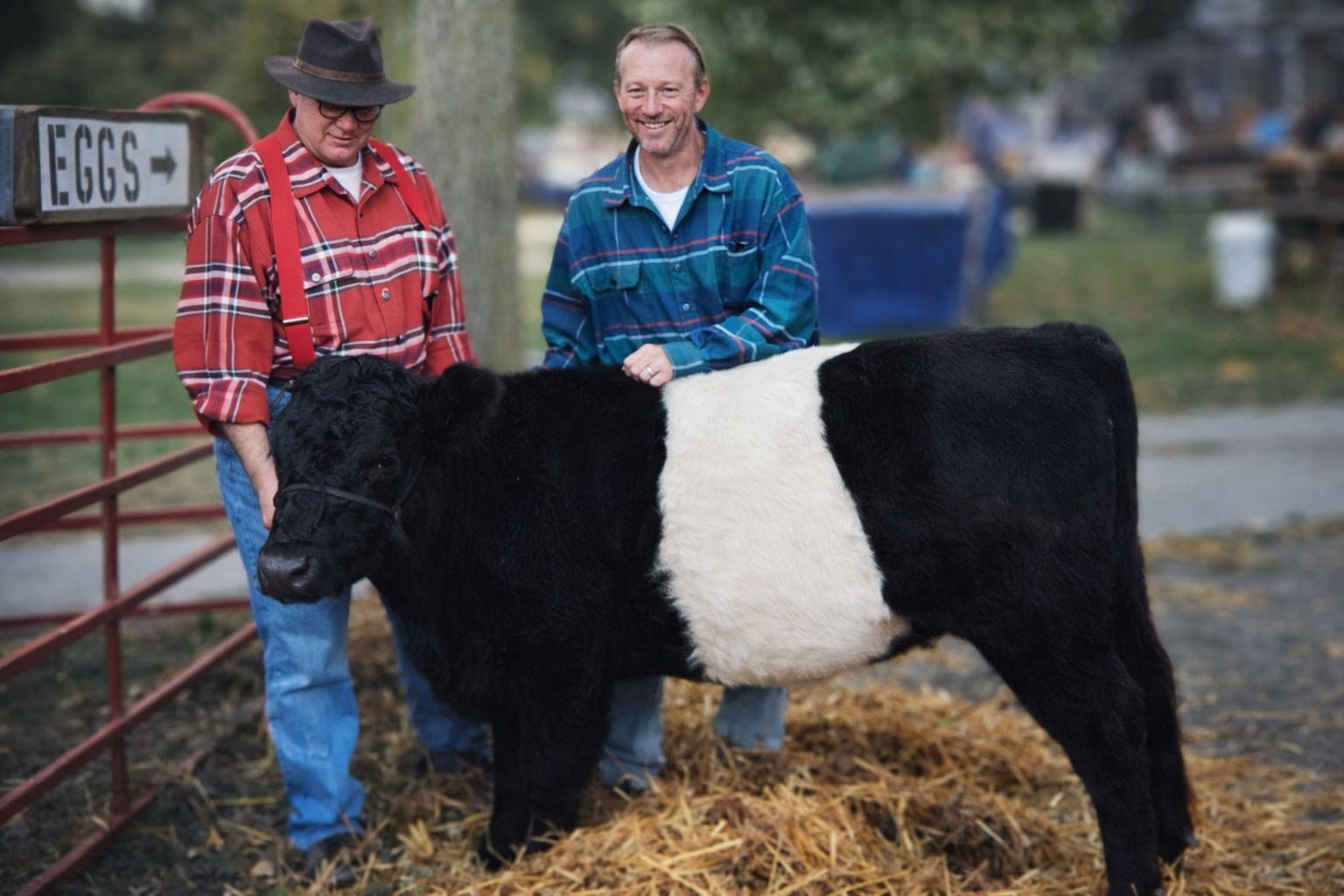
We built a large, red Morton building for our barn. I half expected to come home one day and see faggots painted in white letters across the side of the barn. That never happened.
In fact, the only reference we ever heard to our relationship was when we met new neighbors. They often raised their eyebrows and said, “Oh… You must know Ed and Bill.” We never met them.
Life in 168 square feet
There was no house on the farm.
We added a twelve-by-fourteen-foot room on the barn to live in. When I woke up in the morning, I could shut off the alarm, start the coffee, and turn on the shower without getting out of bed. We had no toilet.
When my mother planned to visit, Doug said, “We can’t let your mother pee out behind the hay bales.” We added a porta-potty for her.
We were living large and living small at the same time.
I said to Doug, “I can live anywhere for six months.” Those six months turned into two years.
Farming was our first act; the house was the beginning of the second.
A house that felt right
Doug and I struggled to agree on what house to build. One day, I drove past a circa 1900 farmhouse about fifteen miles from our farm. It was abandoned, looking like a puppy in need of rescue. But it just felt right. I doubted Doug would agree — but he did.
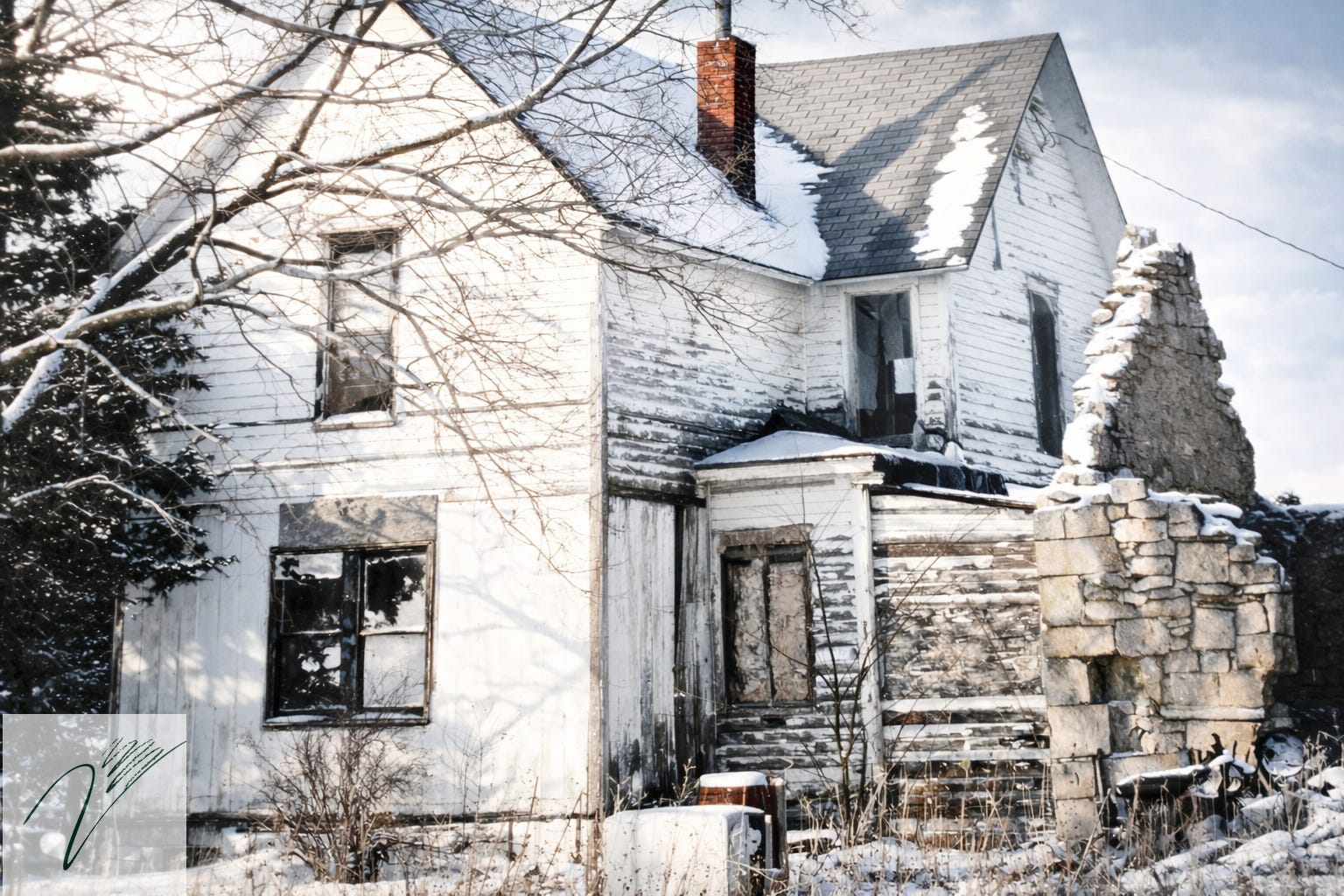
During my mother’s visit, I took her to get her final approval. I was fifty-two and still filled with optimism about the years ahead. As we climbed the steep, narrow stairs to the second floor, we could smell the raccoon poo. She said, “This is perfect.”
My mother always supported my dreams, no matter how irrational. She never said You can’t do that! She only asked How will you do that? My step-father was likely thinking They’re going to need that medical practice!
Moving a house — or moving a life — is really the same work.
We hired a mover who jacked up the house and placed large metal beams under it. At eight o’clock in the morning on the day of the move, they began to move the house down the highway between Winterset and St. Charles. I was wild with excitement and laughed out loud when I saw the redundant sign on the back of the house: Wide Load.
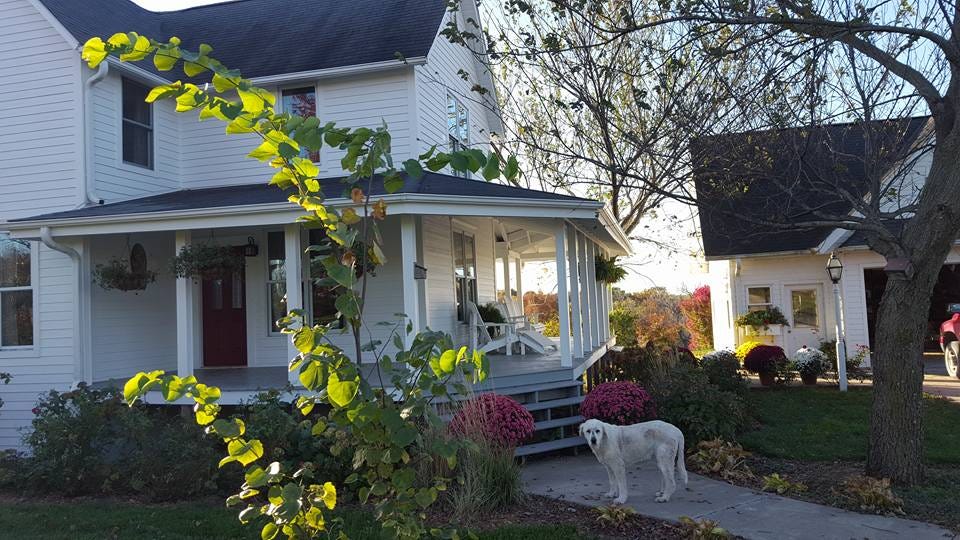
We had expansive plans for the house: an addition for a large country kitchen, a wrap-around front porch, new windows and doors, new wiring, plumbing, and a septic system.
Interior and exterior walls were torn down to the studs. One day, I walked into the soon-to-be kitchen and looked through the floor to the basement. I thought What the hell have we done?
But I always want to rescue puppies.
Our wiring was frayed
By the time I was seventy-two, our bodies were beginning to feel like a demolition crew was on the way. Our circuits were shorting out—and the plumbing… well, never mind about the plumbing.
The joy we felt from the farm was beginning to be outweighed by the demanding work. It was time to hand it over to someone else who still had big dreams.
We weren’t just death cleaning; we were life sorting
Our three-story house, two-story garage, barn, and shed warehoused an abundance of earlier dreams. The farm sold quickly, and we had three weeks to sort through those dreams and decide which ones to carry with us and which to let go. Our 2200 square feet townhouse in a suburb of Des Moines only had room for the dreams we clung to.
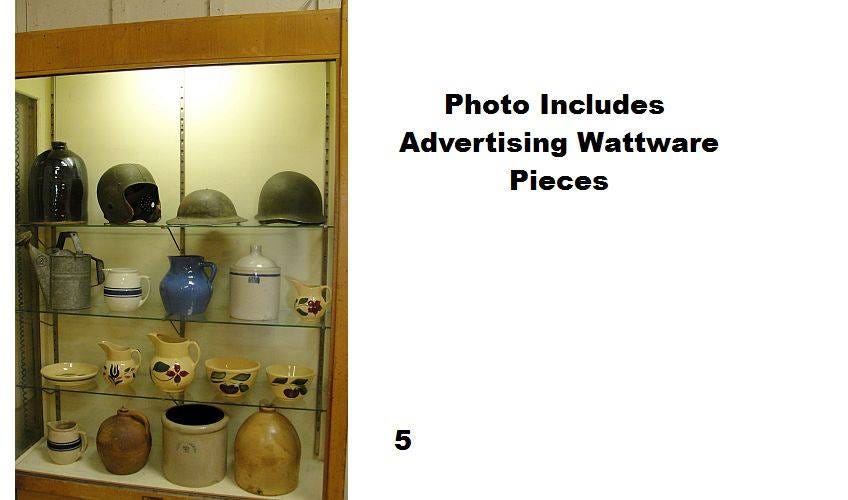
A page in our sale catalog
People asked us if it was difficult to get rid of so many things. Surprisingly, it wasn’t.
I had read The Swedish Art of Death Cleaning by Margareta Magnusson. Magnusson introduces döstädning — death cleaning — as a way to clear possessions while you can still make decisions.
As we quickly sorted through our things, we also began to examine our relationships, our identities, and our values.
Deconstructing and Reconstructing
Moving a house — or moving a life — is really the same work. It is about tearing down walls while saving the best parts. It is about opening up spaces and improving views into the distance.
Magnusson’s advice is practical, but its deeper lesson is philosophical: we have the chance, while we still can, to sort not just possessions but memories, habits, and identities. In Iowa, we moved a 125-year-old house and rebuilt it from studs to shingles.
In life, we dismantled and reconstructed ourselves in much the same way, choosing carefully what remained and what we left behind.
We not only left our farm and house behind, but we also left our old selves behind.
We weren’t only clearing space. We were deciding what to carry forward, what to let go, and what we could rebuild.
The last of our three ten-year-old Great Pyrenees couldn’t make the move. She died as we packed our final loads. She knew she was too old to begin a new life in the city.
Under construction
It takes courage to let go of our outdated selves. My mother’s words are relevant; HOW are you going to do that?
Just enough stuff
Now we live in a smaller home, but we’ve created more space in our lives for friends and family.
We learned in that tiny barn room that happiness doesn’t come from stuff. Too many things are a burden — they require maintenance, time, and energy that could be spent on what matters most.
Our old farmhouse was given a second chance.
We’re still under construction.
— Loren
If you enjoyed this post, please comment, like, or share (that helps get it in front of others).
 | A guest post by
|
I still can't believe you could actually move a house. Boy, it really meant a lot to you, didn't it?
It couldn't have been easy to let go of your past lives there. I'm proud of you for doing it.
I wish I'd get to live on a farm in the West where I could play my violin and serenade the cattle and my man.
I always loved watching houses get moved that way. Something magical about it. And I love the concept of death cleaning. When I left the states I sold my house and all my belongings and started over with only what I could carry in the plane. Absolute freedom!